VKDriven #9 - Notes

Handwritten notes from studying for a rendering job interview

November 6, 2026

This entry is a bit different. I have an interview coming up for a rendering job, and most of what I studied for it is stuff I ran into while building VKDriven. So these are my handwritten notes, going roughly from the Vulkan side of things down to the GPU pipeline and PBR.

Most of the topics have their own entry if you want the longer version with code: data and bindless textures, PBR, HDR and tonemapping, shadow mapping and cascaded shadow maps.

Vulkan
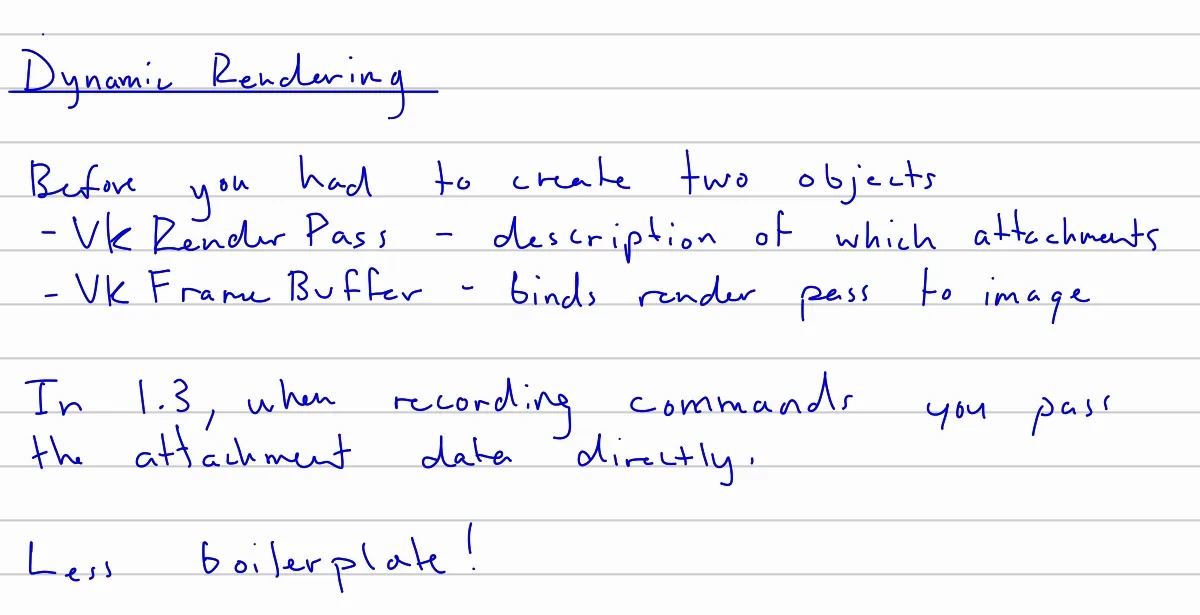
Dynamic rendering: Vulkan 1.3 passes attachment data directly when recording commands, instead of creating a VkRenderPass and VkFramebuffer
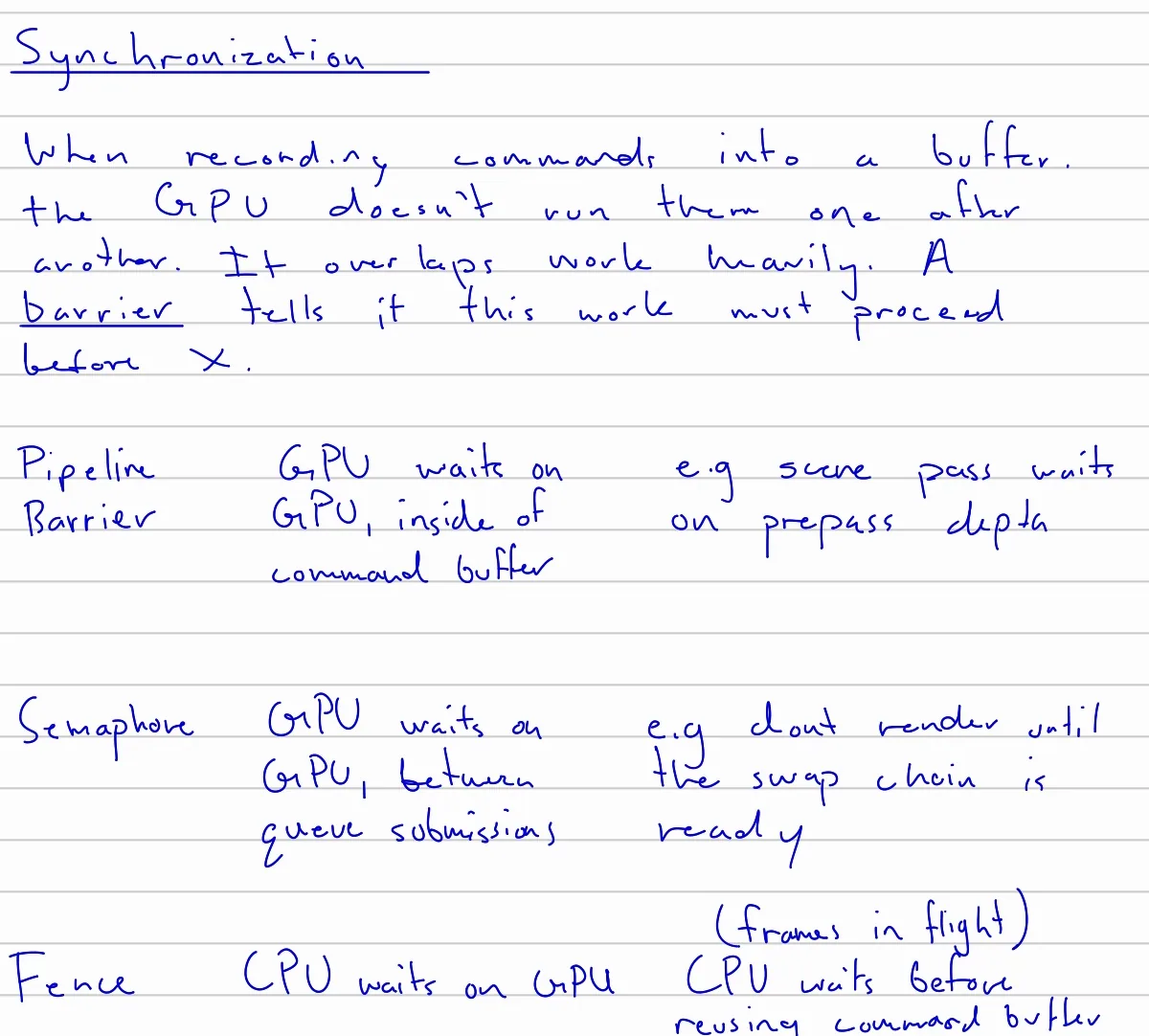
Synchronization: pipeline barriers, semaphores and fences, and what each one waits on
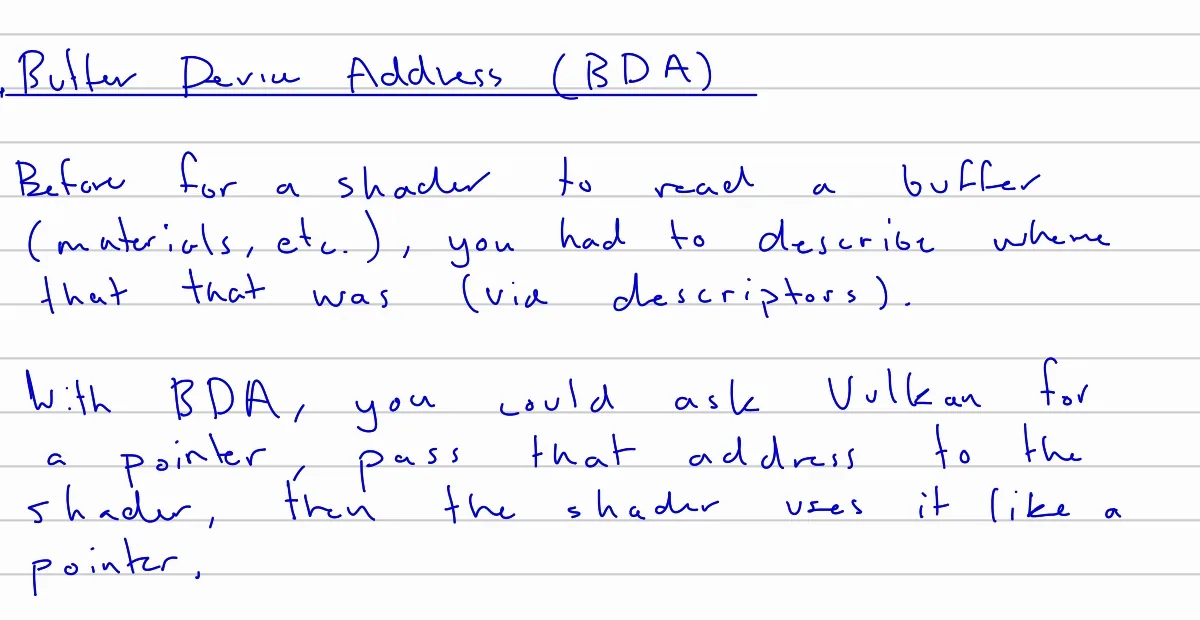
Buffer device address: asking Vulkan for a pointer to a buffer and using it like a pointer in the shader
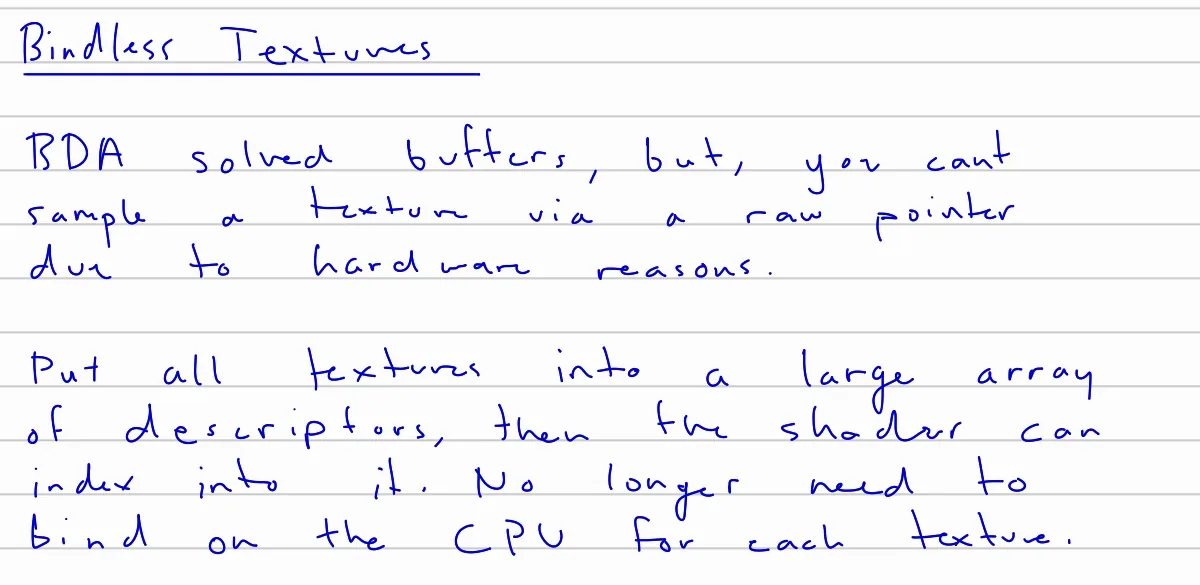
Bindless textures: putting every texture in one large descriptor array that the shader indexes into
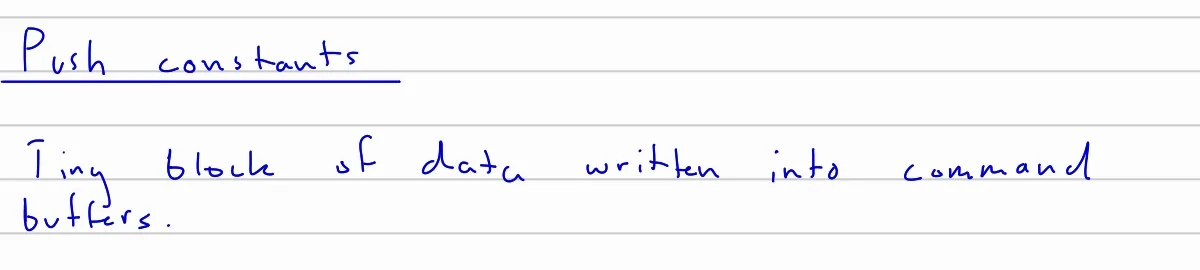
Push constants: a tiny block of data written into command buffers

Shadows, depth and HDR

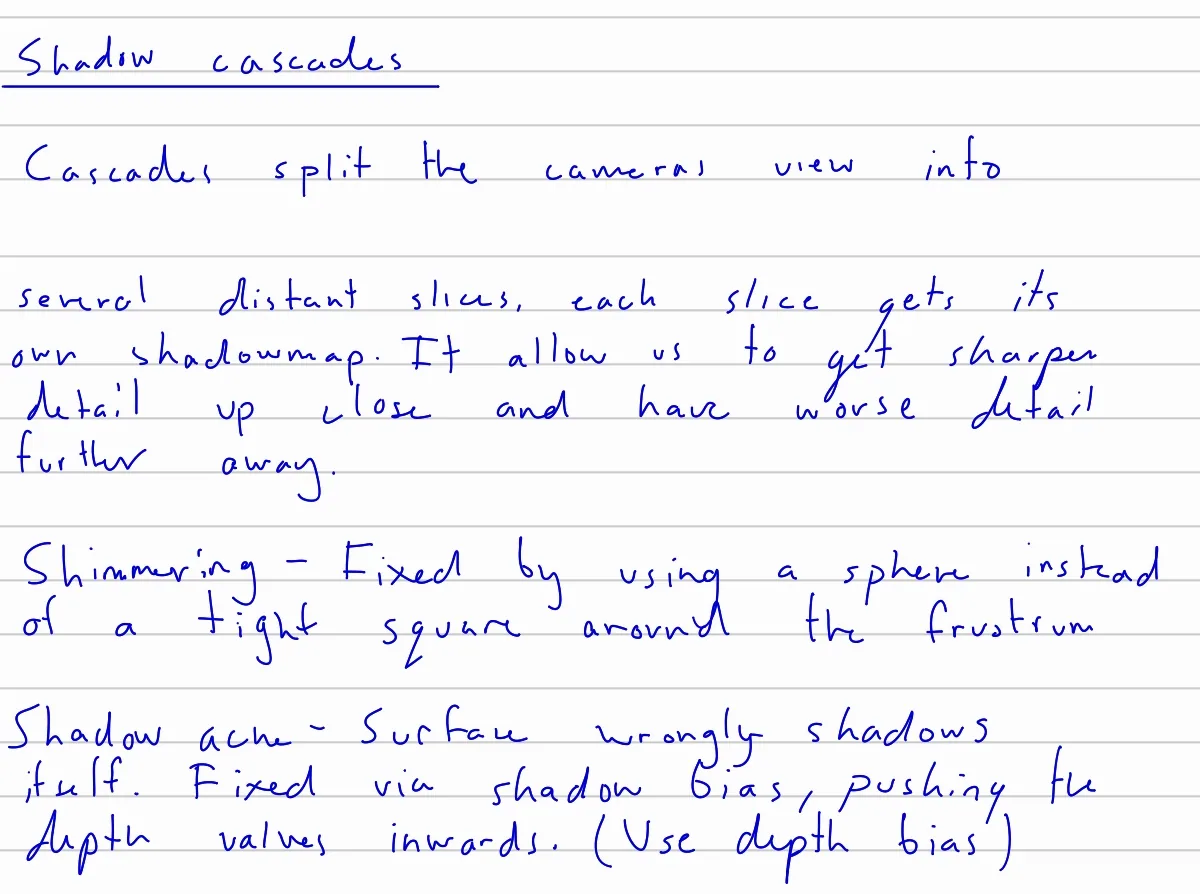
Shadow cascades: splitting the camera view into slices with their own shadow maps, plus fixes for shimmering and shadow acne
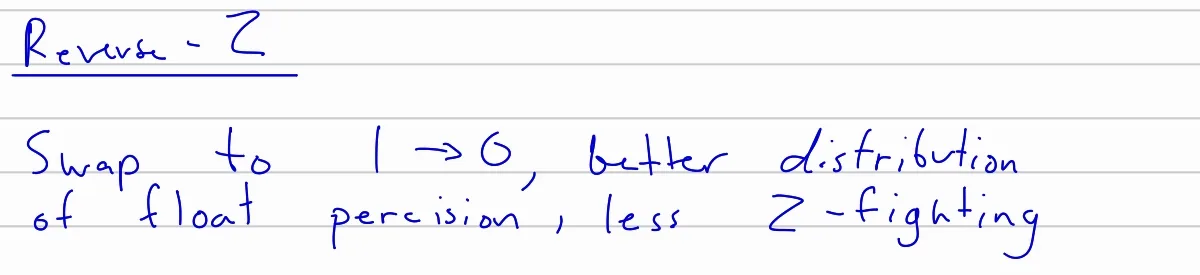
Reverse-Z: swapping depth to 1 to 0 for better float precision and less z-fighting
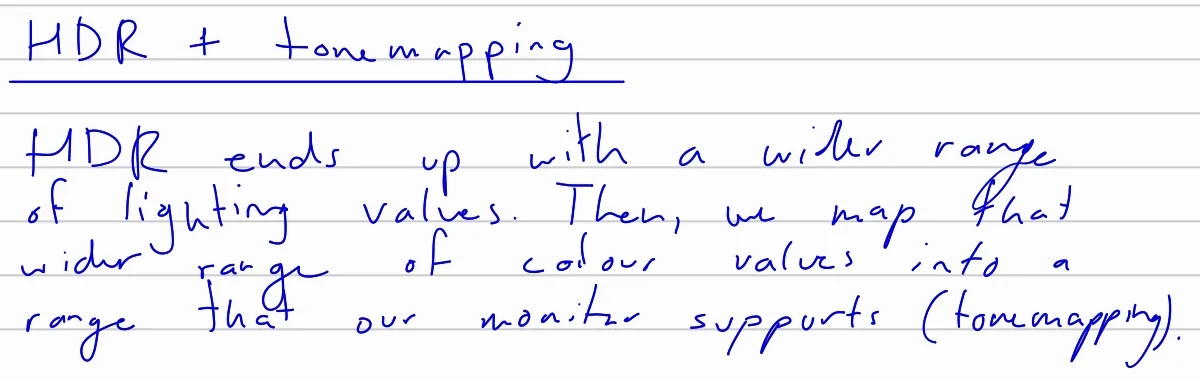
HDR and tonemapping: mapping a wider range of lighting values into the range the monitor supports

Performance and memory

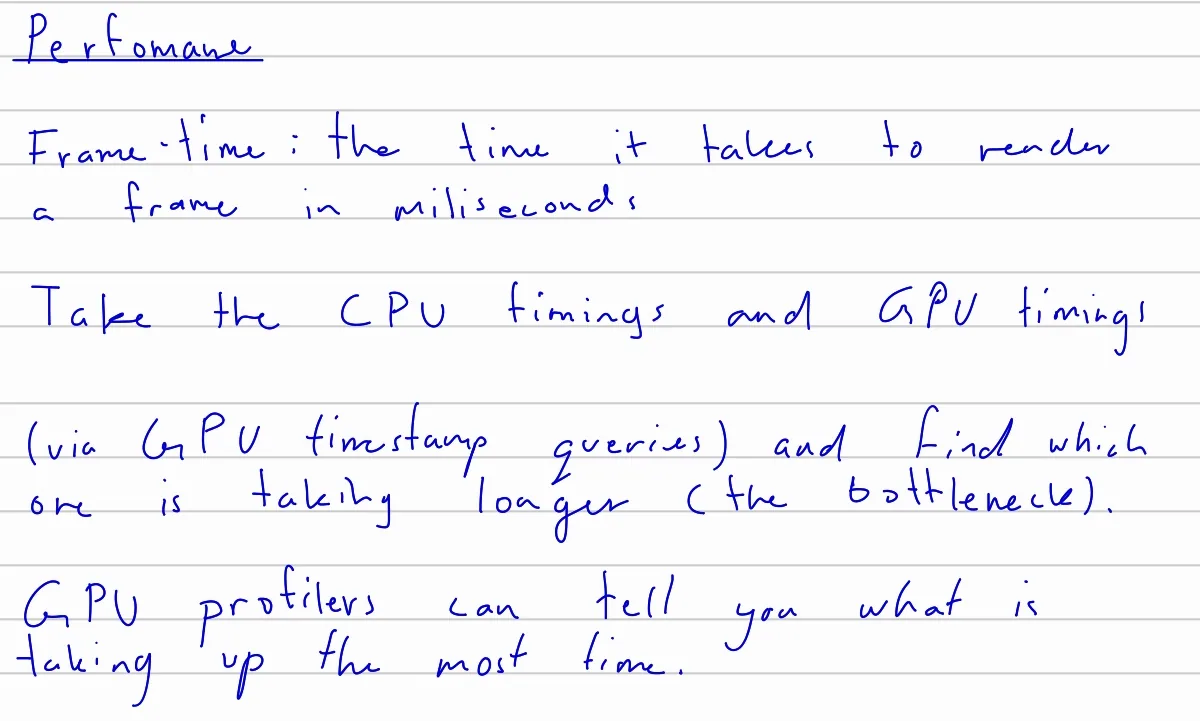
Performance: frame time, comparing CPU and GPU timings with timestamp queries to find the bottleneck, and GPU profilers
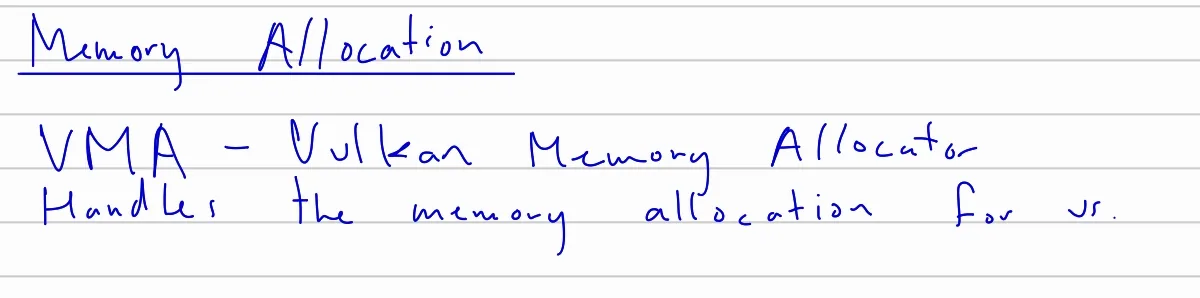
Memory allocation: VMA handles the memory allocation for us

GPU pipeline

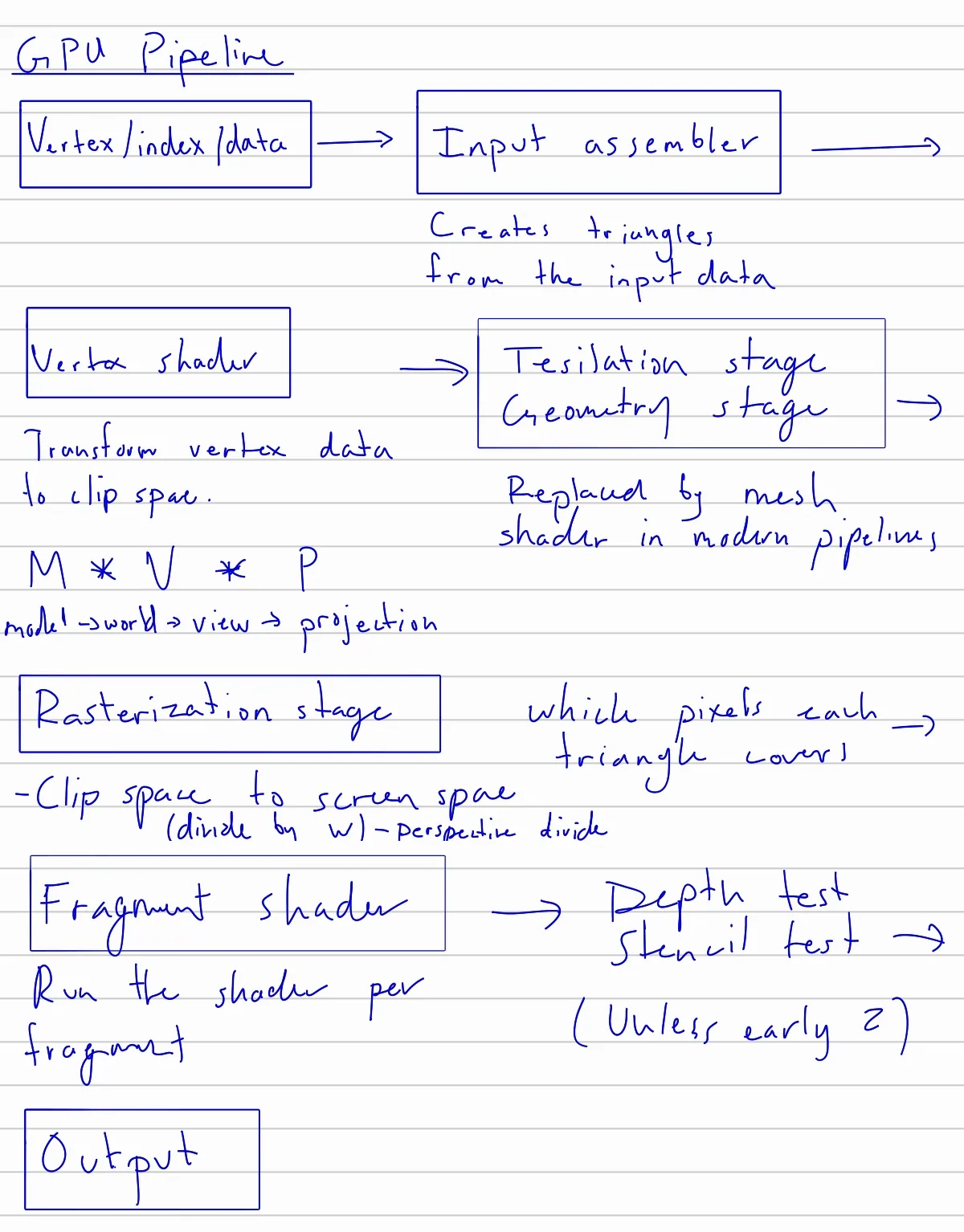
The GPU pipeline from vertex and index data through the input assembler, vertex shader, tessellation and geometry, rasterization, fragment shader, depth and stencil tests, to output

PBR

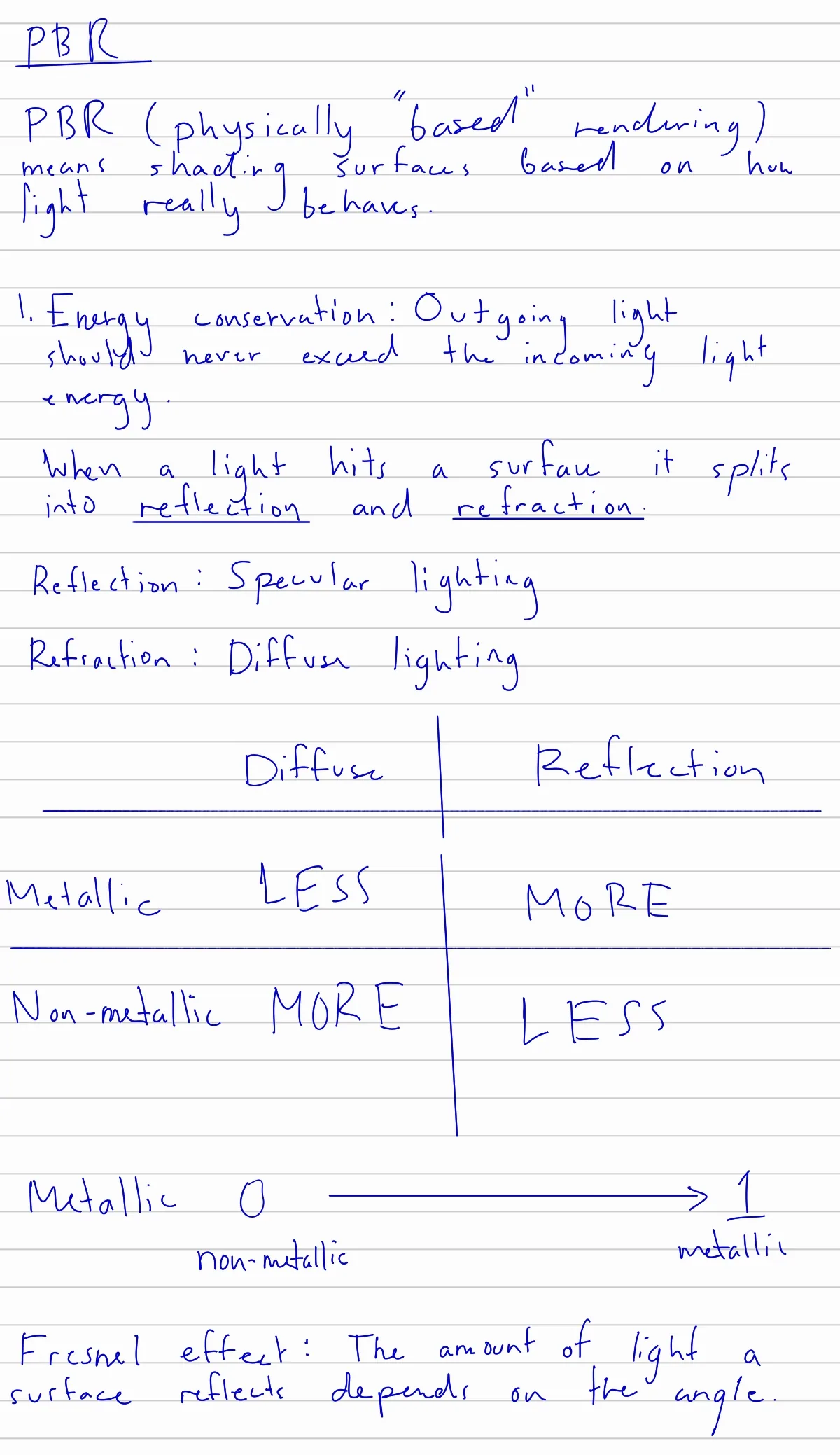
PBR: energy conservation, reflection and refraction as specular and diffuse, how metallic changes the split, and the Fresnel effect
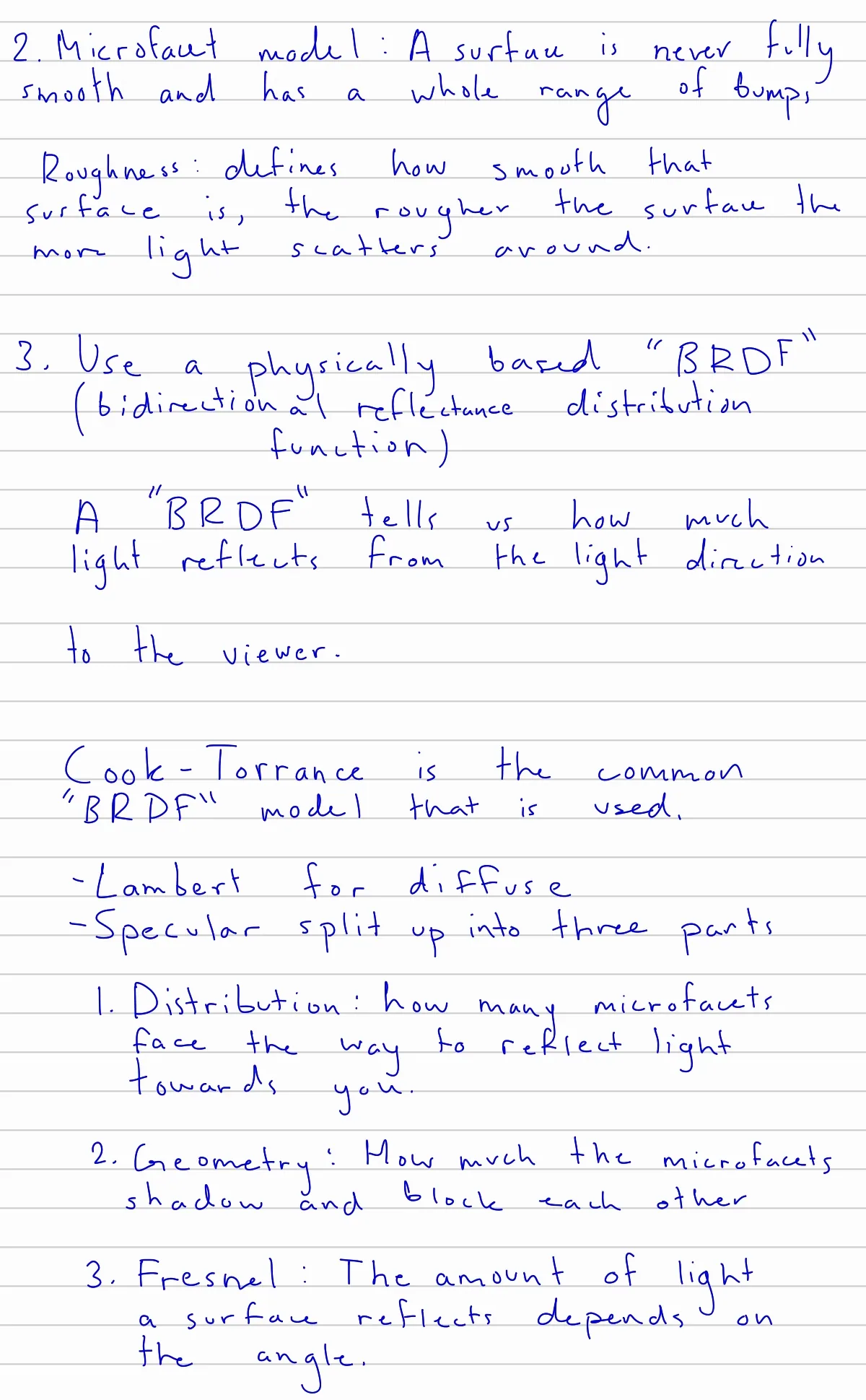
The microfacet model and roughness, what a BRDF is, and Cook-Torrance with Lambert diffuse and a specular term split into distribution, geometry and Fresnel